The coach doors fold open, and forty people step into a cobbled square with a full day of sightseeing in front of them. Your suitcase is back in the hotel room. Whatever you need between now and dinner is already on your shoulder, or it isn't coming.
I have spent more than forty years putting people on buses, boats and trains, and I can usually tell who will enjoy the day before we leave the curb. It's the person carrying a small, sensible bag they packed on purpose.
The Suitcase Gets All the Attention
People spend weeks agonizing over the big luggage. Packing cubes get color coded. Shoes get auditioned like understudies. Then on the first morning they grab whatever tote is handy and toss in a phone and a lip balm.
That tote is the bag you will actually live out of. On a group trip the schedule keeps moving whether you're ready or not, and a dash back to the room is rarely an option. A well-packed day bag lets you stay comfortable without leaving the group, which means your attention goes to the fresco instead of the blister forming on your heel.
What Earns a Spot in the Bag
Every item has to justify its weight. You'll be hauling this thing up church steps and through markets for hours, so think small and think useful.
- Water. A refillable bottle you actually like drinking from. Dehydration sneaks up on people who are busy having a wonderful time.
- Whatever your body needs on schedule. The day's medications, reading glasses, a spare contact lens case. Anything you would panic about forgetting goes in first.
- A light layer. Churches run cool and ferry decks get breezy. Some religious sites also ask visitors to cover their shoulders, and a scarf handles that in seconds.
- A small snack. Lunch can run late. A granola bar has rescued more moods than any tour guide alive.
- Tissues and hand sanitizer. Public restrooms abroad are an adventure of their own, and not every one is stocked.
- A portable charger and a short cable. Your phone is working hard all day as camera and map. Left to its own devices, it will die at the worst possible moment.
- A little local cash. Small coins come in handy for a restroom, a postcard, or an espresso taken standing at the bar.
- The hotel's business card. If you get separated, a taxi driver can read it even when your pronunciation gives out.
What Stays Behind
Your passport is the big question, and the answer depends on where you are. Rules about carrying identification vary from country to country, so ask your tour director on day one and follow their lead. Many travelers keep the original in the room safe and carry a photo or a copy, but let the local expert make that call.
Leave the jewelry box, the thick guidebook, and that second camera lens you haven't touched since 2019. Your guide is the guidebook. A heavy bag turns into the thing you think about all day, and that is a poor trade for a backup of a backup.
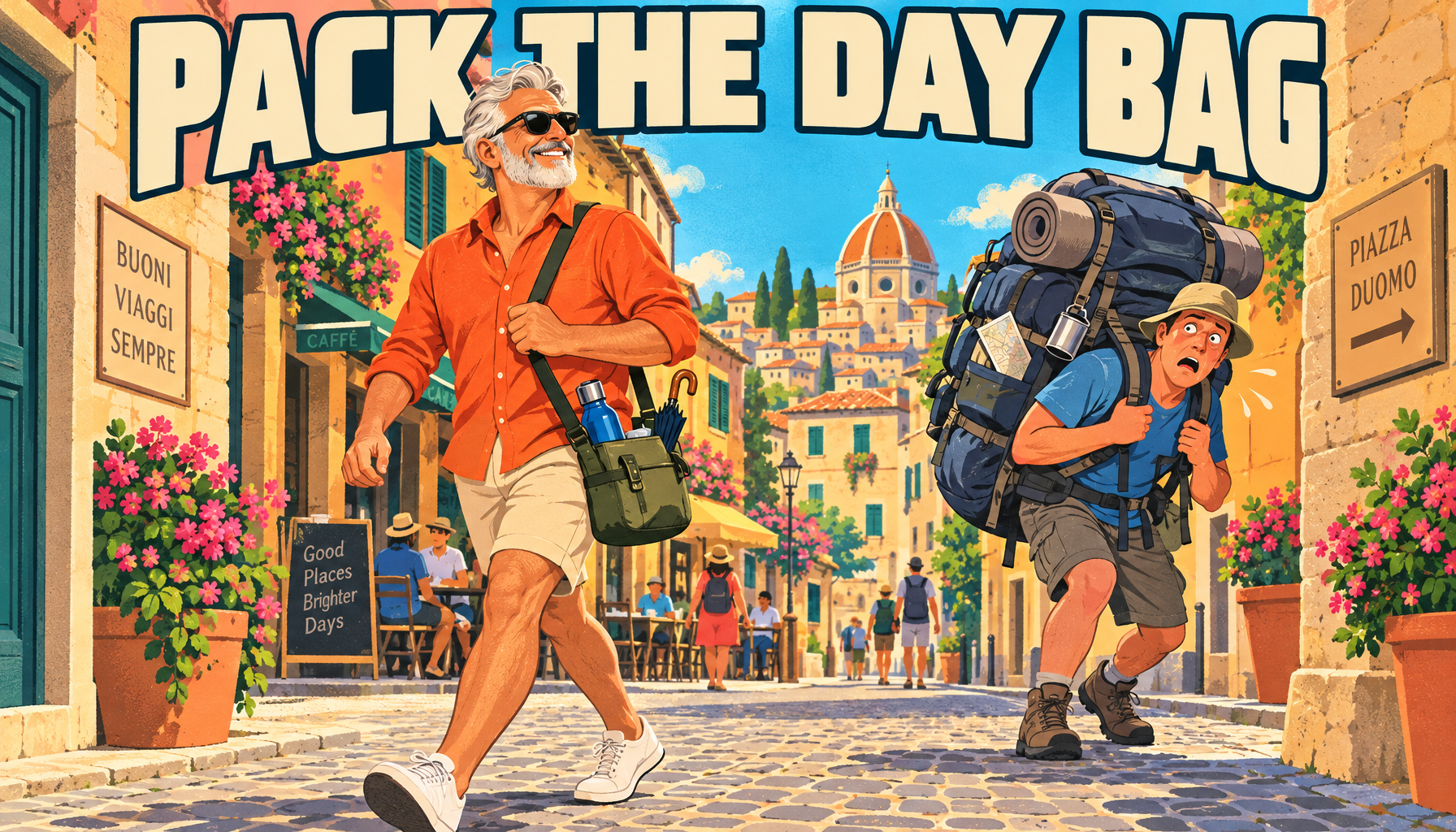
Choose a bag that zips fully closed and can sit in front of you in a crowd. Crossbody styles suit most people. A backpack is fine for countryside days, though some museums ask visitors to check larger bags, so pick one you won't mind handing over.
Pack It the Night Before
Group departures are brisk. The person digging through a suitcase at 8:25 looking for sunscreen is the person who boards flustered and gets the last seat by the restroom.
Before bed, glance at tomorrow's itinerary and pack for it. A vineyard visit means a hat and sturdier shoes. If there's a cathedral on the schedule, the scarf goes in. Long coach transfers are when the neck pillow and a paperback earn their place. Then set the bag by the door and go to sleep like someone with their life in order.
The Quiet Hero of the Group
Something lovely happens around day three. The person with the well-stocked bag becomes the one everybody turns to. A bandage for a heel. A pen for a form. A mint before the wine tasting, which nobody requested and everyone accepts.
That small generosity is how strangers on a bus start turning into friends. You don't need to carry supplies for forty. Tucking in one extra of the little things is plenty, and it costs you almost nothing.
By four in the afternoon, the trip you're having comes down to what you remembered to put in a very small bag.
A good day bag works on any trip we run, from a sunny clothing-optional week by the water to a slow heritage tour through the village your grandparents left. Take a look at our upcoming trips and start picturing the day you'll be packing for.
Photo by Stella Soomlais on Unsplash