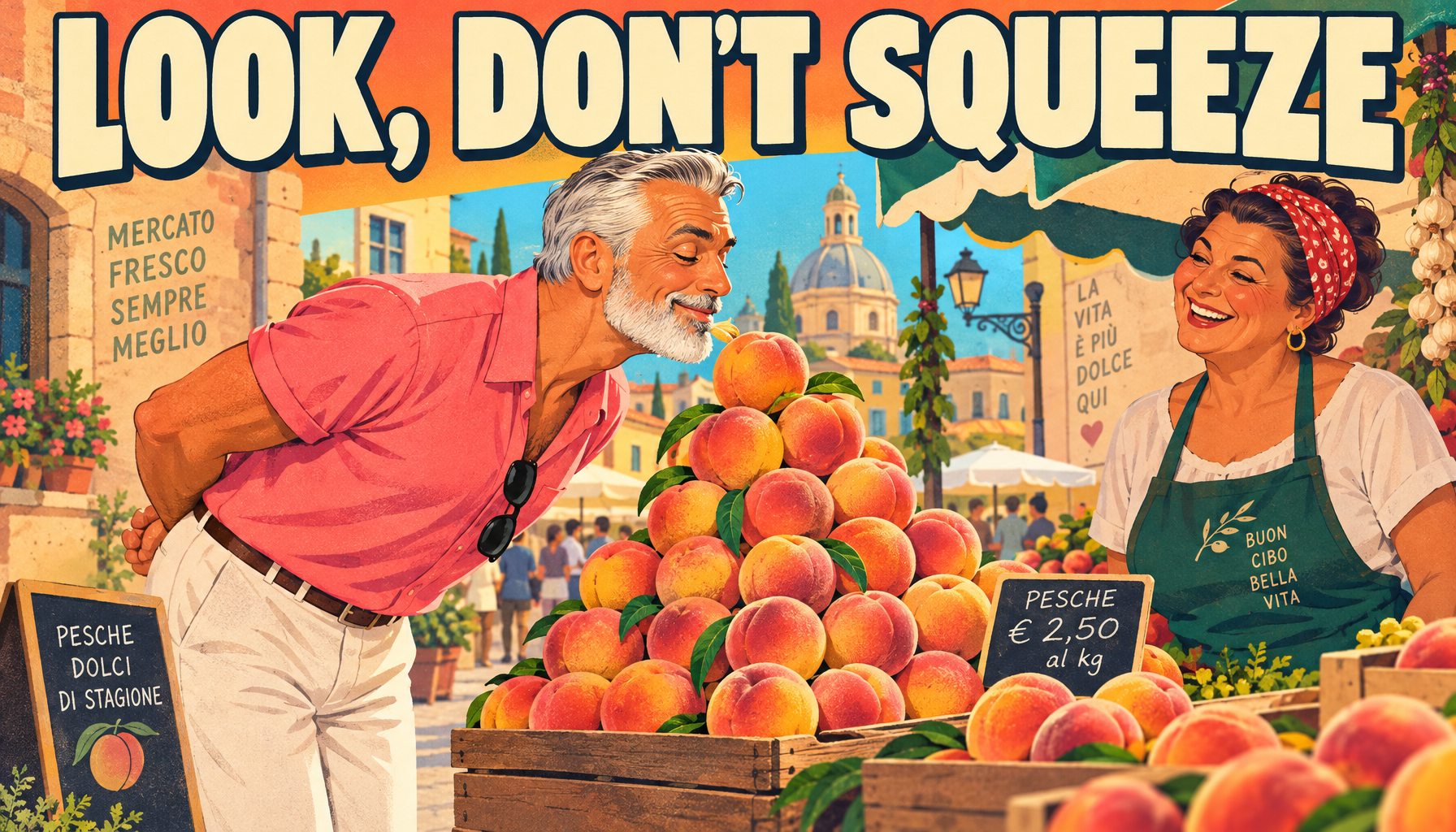
It is half past eight in a market square somewhere you have never been. A woman in a quilted vest is weighing figs with the gravity of a jeweler, and you have just reached for a peach. She looks at your hand the way a museum guard looks at a toddler wandering toward a Rothko.
Welcome to the morning market, where the produce is gorgeous and the rules are unwritten. Nobody hands you a pamphlet at the entrance. You learn by watching, or you learn by being gently scolded in a language you studied for one semester and mostly remember as verb charts.
Arrive early, and arrive curious
Markets have a rhythm, and the best part of it happens before most visitors have finished their second coffee. The early hours belong to the regulars. They know which stall has the good tomatoes and which one is coasting on charm and a striped awning.
Take one slow lap before you buy anything. Notice where the line is longest and who is standing in it. If the grandmothers are queuing, so should you.
Ask your cruise director or hotel concierge which day the market runs. Plenty of towns hold theirs once or twice a week rather than daily, and arriving at an empty square with a tote bag and high hopes is a very particular kind of sad.
Let the vendor do the choosing
Now, about that peach. In a good many European markets, particularly in Italy and France, the custom is that you point and the vendor picks. Squeezing the merchandise yourself can come across as a small insult, as though you suspect them of slipping you something bruised.
So say what you want and when you plan to eat it. Asking for a melon for tonight gets you a very different melon than one for Thursday, and a vendor asked that question tends to warm right up. You have just told them you trust their judgment, and flattery remains the oldest currency in commerce.
Learn the greeting before you learn anything else. A cheerful bonjour or buongiorno on arrival buys more goodwill than a perfectly conjugated sentence ever could. A thank you on the way out finishes the job.
Shop for a picnic, never a pantry
The great temptation is to shop as though you have a kitchen. You do not. You have a cabin with a minibar the size of a hatbox, or a hotel room with a kettle and ambitions.
Buy for the next six hours. A wedge of whatever cheese the vendor seems proudest of, a bit of bread, a paper cone of cherries, something cured if you are so inclined. Then find a bench with a view and eat it like a person with nowhere in particular to be.
If you want to carry something home, think small and sealed. Rules on bringing food across borders vary by country and change often, so check before you pack that beautiful sausage. Something packaged travels better than something fresh, and it is far less likely to start a conversation at customs.
A few things worth having in hand
- Small bills and coins. Many stalls take cards now, though not all of them, and nobody wants to break a large note for two apricots.
- A folding tote. It spares you a fistful of plastic bags and leaves a hand free for samples.
- Some patience. Conversations happen at market stalls. The person ahead of you may be discussing a grandson's wedding in considerable detail, and that is part of the show.
Accept the sample when it is offered. Refusing would be rude, and anyway, that is how you meet the olive you will still be thinking about in February.
The finest souvenir from a morning market is the hour you spent there, and possibly a cheese you cannot pronounce.
Why a market belongs on a cultured itinerary
A cathedral tells you what a town believed four hundred years ago. For what it believes this morning, follow the people carrying baskets. You see the season laid out on the tables, overhear the gossip in the queue, and learn more about regional pride from one spirited debate over olive oil than a guidebook could manage in a chapter.
Here a traveler gets to take part instead of merely looking on. The still life is for sale, and by noon it will be your lunch. Few museums can make that offer.
There is also a pleasant humility to it. You are a guest in someone's daily routine, fumbling with coins and pointing at pears, and most vendors will meet that with surprising kindness. Some of the best conversations of a trip begin with a mispronounced word for cheese.
If a trip with room for mornings like this sounds about right, take a look at what we are planning at Dorothy Travel. Bring a tote. Leave the peaches to the professionals.
Photo by Margit Knobloch on Unsplash